

Capacity building sector
Plan Description
The public resource sector covers a wide range of areas, including hospitals, schools, large libraries, sports venues, government office buildings, public transportation hubs (subway stations, train stations, airports), and municipal facilities (sewage treatment plants, water plants), all of which are public service locations. These places have various types of loads, mainly including: large medical imaging devices like X-ray, CT, and MRI machines in hospitals; multimedia teaching equipment, computer labs, variable-frequency air conditioners, elevators, water pumps, and LED lighting fixtures in schools and office buildings; signal power supplies, UPS systems, ventilation systems, escalators, and lighting in transportation hubs; and aeration blowers, lift pumps, sludge dewatering equipment, and variable-frequency controllers in municipal water treatment facilities. These devices frequently use power electronics technologies such as switching power supplies, variable frequency drives, and rectification/inversion, making them typical nonlinear loads that generate a large amount of harmonic current during operation. For example, the harmonic distortion rate of hospital CT machines generally reaches 35% to 45%, with some equipment going as high as 60%. Harmonic pollution can lead to overheating of distribution transformers and power cables, accelerated insulation aging, misoperation of relay protection devices, inaccuracies in energy metering, and interference with precision medical equipment and lab instruments. At the same time, many inductive loads (air conditioners, water pumps, fans, etc.) usually have a low power factor during operation, causing lower transformer output and increased line losses. The combined issues of harmonic pollution and reactive power deficiency seriously affect the power supply safety and service reliability of public facilities.
Recommended Solution
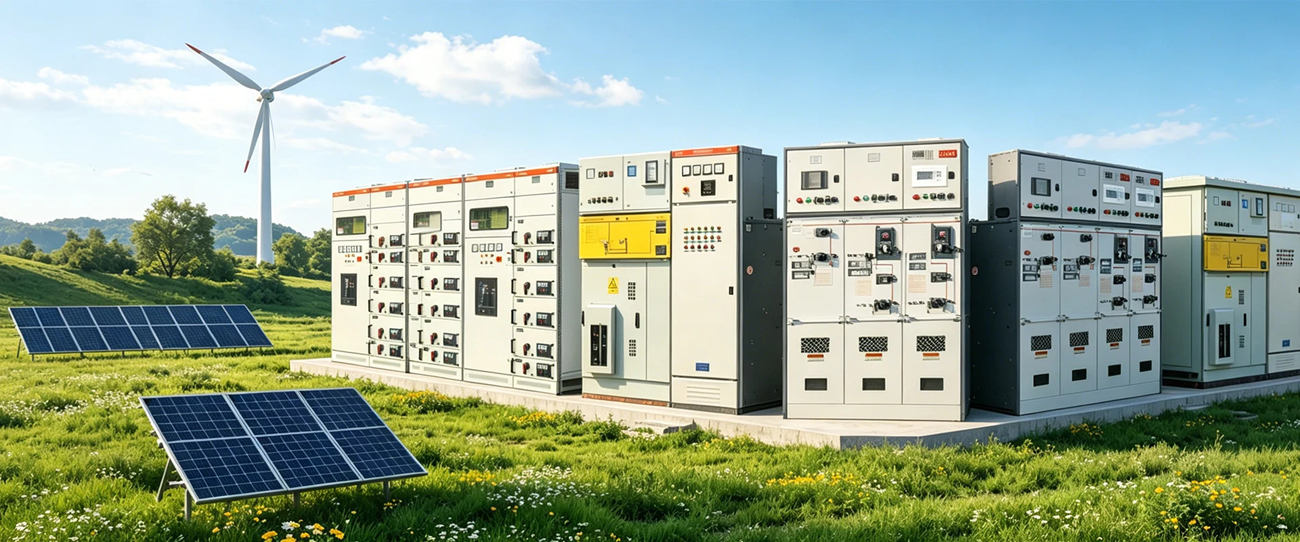
For low-voltage distribution systems in public resource projects, configure IVL-RCS static filter compensation modules. These modules consist of filter capacitors and filter reactors, specifically designed for reactive power compensation and filtering in harmonically polluted distribution systems. The RCS series modules with a 7% reactance rate have a tuning frequency of 189Hz, effectively suppressing 5th-order and higher harmonics while providing reliable reactive power compensation; the RCS series with 14% reactance rate have a tuning frequency of 134Hz, effectively suppressing 3rd-order and higher harmonics. For public resource sites with strict power quality requirements, such as hospitals and data centers, IVL-APF active filters can be further installed to work in tandem with IVL-RCS static filter modules, achieving dual benefits of reactive power compensation and harmonic filtering. Combined with our company's complete range of power equipment—high-voltage switchgear, low-voltage switchgear, modular substations, cable branch boxes, distribution substations, ring main units, gas-insulated switchgear, environmental cabinets, prefabricated cabins, etc.—we can provide a full-chain power quality solution from high-voltage incoming lines to low-voltage distribution, ensuring safe, stable, and efficient operation of the distribution system.
Solution Benefits
Effectively raise the power factor of public resource distribution systems to above 0.95, avoiding power factor penalty fees; reduce line and transformer losses, improving power supply efficiency; eliminate harmonic currents to ensure the normal operation of critical equipment such as hospital precision medical devices, school lab instruments, data center servers, and transportation hub signal systems, reducing failure rates and extending service life; suppress harmonic amplification, remove system resonance risks, and protect reactive power compensation capacitors from damage; improve voltage fluctuations and three-phase imbalance, ensuring uninterrupted public services. The solution offers both energy savings and operational reliability, providing high-quality power support for the public resource sector.