

Infrastructure sector
Solution description
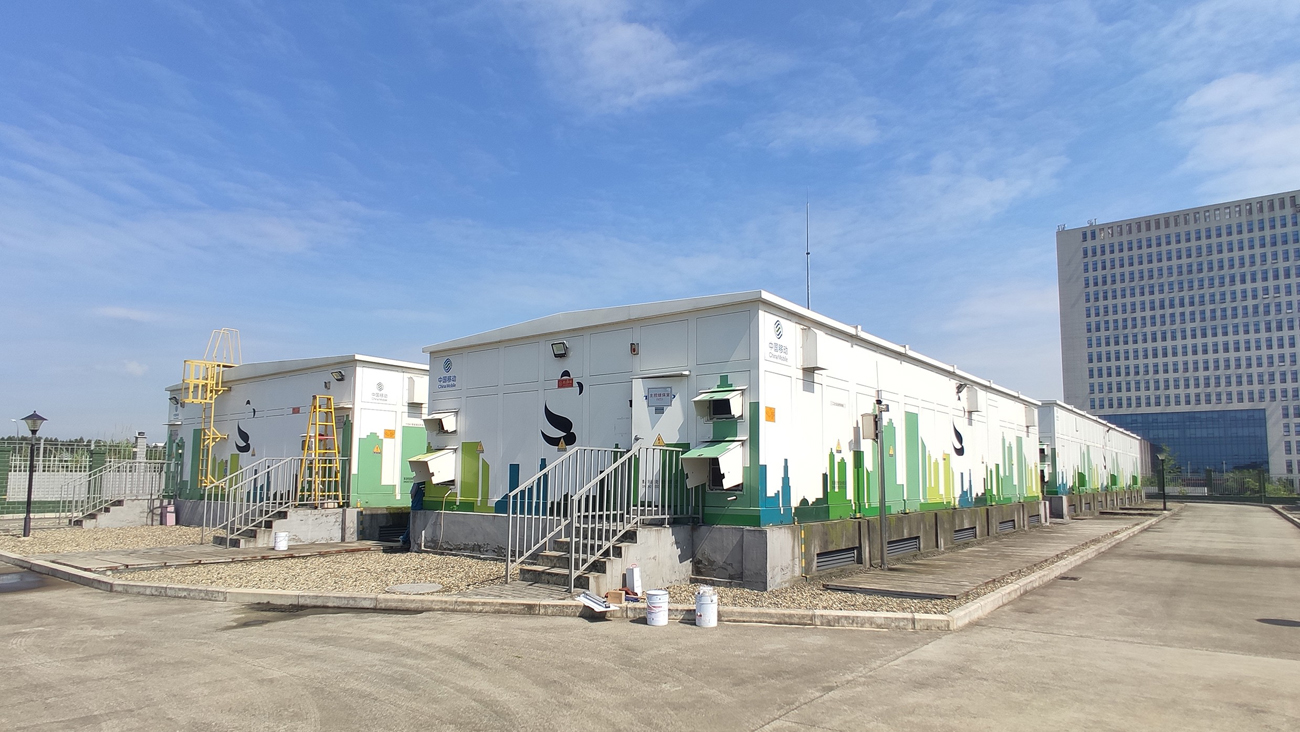
Infrastructure is the cornerstone supporting urban operations and economic and social development, covering a very wide range of areas, mainly including: water facilities (water plants, sewage treatment plants, pressurized pump stations); transportation facilities (subway stations, railway passenger stations, airport terminals, highway tunnels, port terminals); communication infrastructure (telecom buildings, communication base stations, data centers); and large public buildings (stadiums, exhibition centers, government office buildings), etc. These locations have diverse load types and high requirements for power supply reliability.
Water facilities mainly include: water intake pumps, delivery pumps, blowers, aerators, mixers, sludge dewatering machines, dosing equipment, and many other motor-type loads. Variable frequency speed control technology is widely used in water treatment systems; Transportation facilities mainly include: ventilation and air conditioning systems, escalators and vertical elevators, signal power supplies, UPS uninterruptible power supplies, communication and monitoring equipment, lighting systems, etc.; Communication infrastructure mainly includes: UPS power supplies (large capacity units, mostly 6 pulse waves), switching power supplies (power for computers and other office equipment, in large quantities), variable frequency air conditioners, elevators, water pumps, etc.; Public buildings such as stadiums include large amounts of LED lighting, gas discharge lamps, etc.
Among these devices, a large number of nonlinear loads such as inverters, UPS, and switching power supplies generate abundant harmonic currents during operation. In the water industry, extensive use of inverters has caused harmonic issues, and electronic devices such as DC screens, PLCs, and communication equipment using switching mode power supplies also produce some harmonic pollution. In transportation facilities, energy-saving lighting generates three harmonic currents, which are zero-sequence harmonic currents. The three-phase vector angles are consistent, and harmonic currents on the N-line overlap occur, with the N-phase current reaching three times the phase line. The switching power supply generates a current surge at startup, continuously polluting the system with harmonic currents during operation. In communication facilities, UPS and switching power supplies are the main harmonic sources, producing harmonics such as the 3rd, 5th, and 7th harmonics. Harmonics reduce the efficiency of energy production, transmission, and utilization, interfere with the normal switching of reactive power compensation capacitors, cause electrical equipment to overheat, generate vibration and noise, accelerate insulation aging, and even trigger faults or burnouts. Harmonics can also cause local parallel or series resonance in the power system, amplifying harmonic content, causing capacitors and other equipment to burn out, causing false activation of relay protection and automatic devices, and causing confusion in energy metering. Meanwhile, a large number of motor-type inductive loads consume a large amount of reactive current during operation, resulting in generally low power factor. In some places, such as subway stations, when the load is basically out at night, inductive reactive power is nearly zero, generating capacitive reactive power up to several Mkvar. The reverse flow of reactive power to the power system leads to increased line voltage and reduced power factor. Harmonic pollution and reactive power issues overlap, seriously threatening the safety and operational reliability of infrastructure power supply.
Recommended plan
In infrastructure project low-voltage distribution systems, an IVL-RCS static filtering compensation module is installed. This assembly consists of filter capacitors and filter reactors, specifically designed for reactive power compensation and filtering in harmonic pollution distribution systems. Among them, the RCS series filter compensation modules with a reactance rate of 7% have a tuning frequency of 189Hz, providing reliable reactive power compensation while effectively suppressing harmonic pollution of five or more harmonics; The RCS series filter compensation modules with a reactance of 14% have a tuning frequency of 134Hz, effectively suppressing harmonic pollution of three times or more. The selection of capacitor compensation devices should take into account the influence of harmonics in the distribution system and configure the resonance suppression reactors according to the harmonic characteristics of the load. This component uses high-voltage rated low-voltage filter capacitors and H-class insulated, H-class insulated, low power consumption, strong overload capacity, and highly reliable filter reactors. For places with complex harmonic spectrum compositions and stringent power quality requirements, such as communication equipment rooms, IVL-APF active filters can be further configured to work in coordination with IVL-RCS static filter compensation components to achieve dual reactive power compensation and harmonic filtering. Combined with our company's production of complete power equipment such as high-voltage switchgear, low-voltage switchgear, box-type substations, cable branch boxes, switchhouses, ring control cabinets, gas inflators, environmental protection cabinets, and prefabricated cabins, we can provide full-chain power quality solutions for infrastructure projects from high-voltage incoming lines to low-voltage distribution, ensuring the safe, stable, and efficient operation of distribution systems.
Solution benefits
Effectively improve the power factor of infrastructure distribution systems above 0.95, avoiding power factor fines caused by substandard power factor; Reduce losses in lines and transformers, minimize energy waste, and improve power supply economics; filter harmonic currents to protect key production equipment such as blowers and pumps in water facilities, ensure reliable operation of sensitive loads like signal systems, communication equipment, and UPS in transportation facilities, and avoid interference with communication equipment; Suppress harmonic amplification, eliminate system resonance hazards, protect reactive power compensation capacitors, and ensure the stability of reactive power compensation equipment; Extend the service life of various electrical equipment, reduce maintenance and replacement costs; Avoid accidents caused by electrical hazards caused by harmonics. The solution combines energy saving, consumption reduction, and reliable operation, providing high-quality power assurance for the infrastructure sector.