

Power grid sector
Plan Description
The types of loads in the power grid cover a wide range, mainly including electricity for residential life, commercial use, industrial power, and public facilities supplied by various substations and distribution lines. In the grid system, the widespread use of numerous nonlinear loads (such as variable-frequency drives, rectifiers, power electronic devices, electrified railway traction power supply systems, etc.) and distributed renewable energy (photovoltaic, wind power) grid-connected inverters has generated a large amount of harmonic currents and voltages. At the same time, transmission and distribution lines, transformers, and various inductive loads consume a lot of reactive power during operation, leading to a low power factor. The combined issues of harmonic pollution and reactive power deficiency not only increase the losses of transmission lines and transformers and reduce the economic efficiency of the grid but may also cause capacitor overcurrent, overload, and insulation aging problems. During peak electricity periods in summer and major renewable energy generation periods, grid voltage fluctuations, flicker, and three-phase imbalance become particularly prominent, seriously threatening the safe and stable operation of the power grid.
Recommended Solution
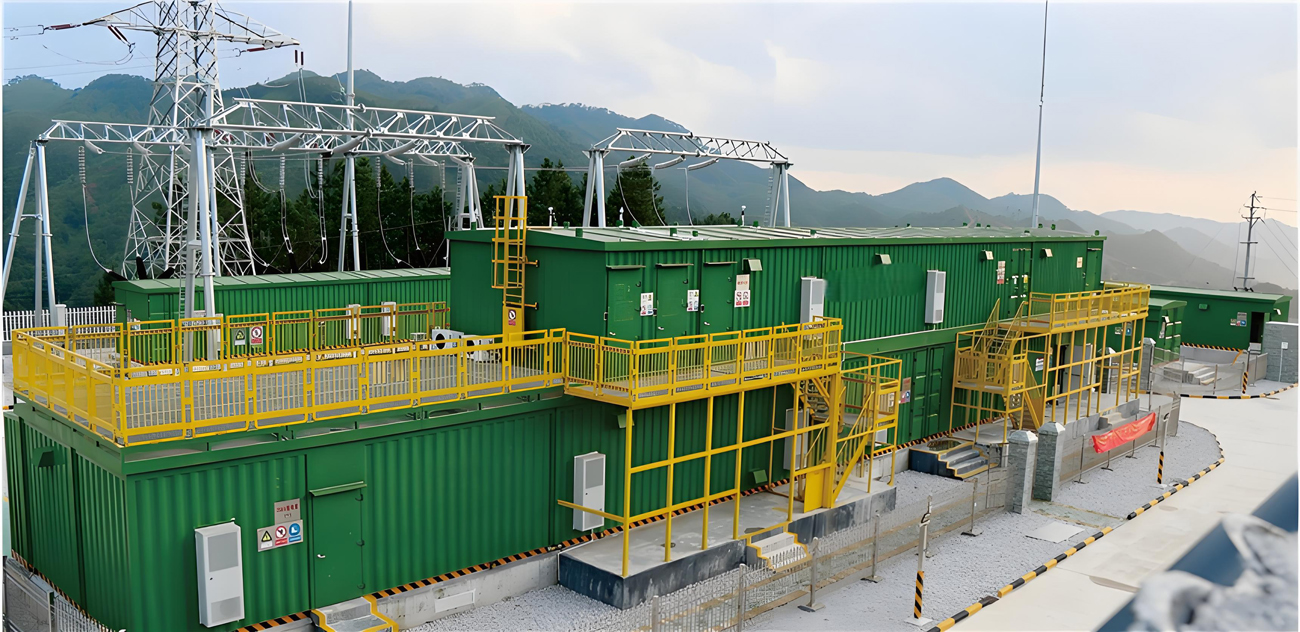
Install IVL-RCS static filter compensation components in substations and low-voltage distribution systems of the power grid. This component consists of filter capacitors and filter reactors, specifically designed for reactive power compensation and filtering in harmonic-polluted distribution systems. Among them, the RCS series filter compensation component with a 7% reactance rate has a tuning frequency of 189Hz, effectively suppressing 5th and higher harmonics while providing reliable reactive power compensation; the RCS series component with a 14% reactance rate has a tuning frequency of 134Hz, effectively suppressing 3rd and higher harmonics. For grid scenarios with high harmonic content, such as renewable energy integration and electrified railways, IVL-APF active filters can be further installed to work in coordination with IVL-RCS static filter compensation components, achieving dual benefits of reactive power compensation and harmonic filtering. Together with our complete power equipment, including high-voltage switchgear, low-voltage switchgear, prefabricated substations, cable branch boxes, switching stations, ring main units, gas-insulated cabinets, eco-friendly cabinets, and prefabricated pods, we can provide end-to-end power quality solutions from high-voltage transmission and transformation to low-voltage distribution, ensuring the grid system operates safely, stably, and efficiently.
Solution Benefits
Effectively improves the power factor of the grid, reduces the flow of reactive current in transmission and distribution lines, lowers line and transformer losses, and enhances the economic efficiency of grid transmission; increases the effective output of transformers, boosts power supply capability, and delays grid expansion investments; filters harmonic currents, preventing capacitor overcurrent and overload, extending equipment lifespan; suppresses harmonic amplification, eliminating system resonance risks, ensuring reliable operation of relay protection and automation equipment; improves voltage fluctuations, flicker, and three-phase imbalance in the grid; provides dynamic voltage support for integrating renewable energy such as photovoltaic and wind power, helping to increase renewable energy consumption. The solution offers both energy-saving and reliable operation benefits, providing high-quality power quality assurance for the grid.